ESA APEx
Building the route from Earth-observation research to real-world adoption
Designing for adoption in Earth observation. Stakeholder strategy, visual direction and engagement for ESA APEx, connecting scientists, platform providers and end users around a shared route from research algorithms to operational services.
Context
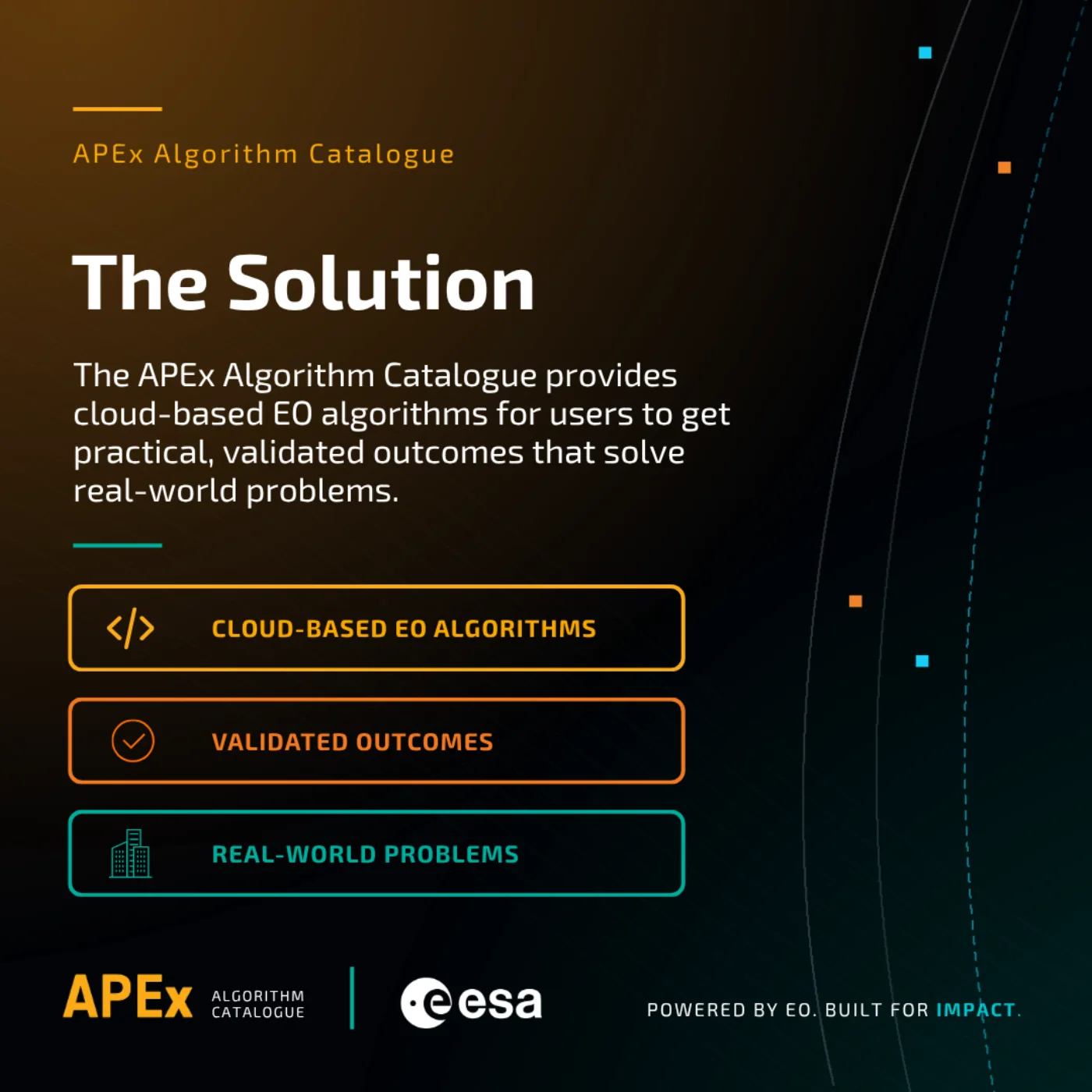
APEx is designed to help scientific algorithms move beyond research environments and into reusable, operational services. My work sits around that transition: understanding who needs the platform, what would make it valuable to them, and how its technical architecture can be translated into a coherent experience.
Tension
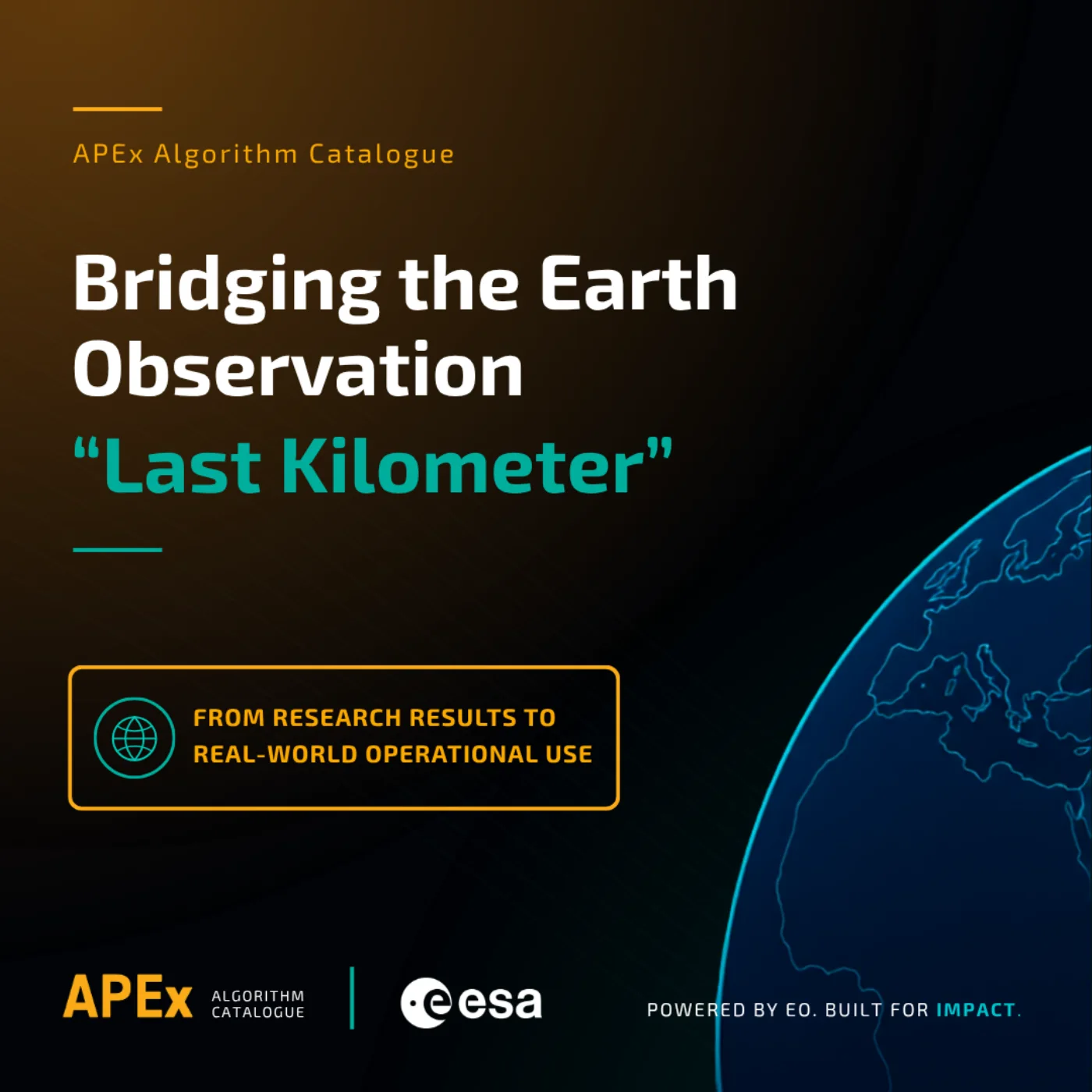
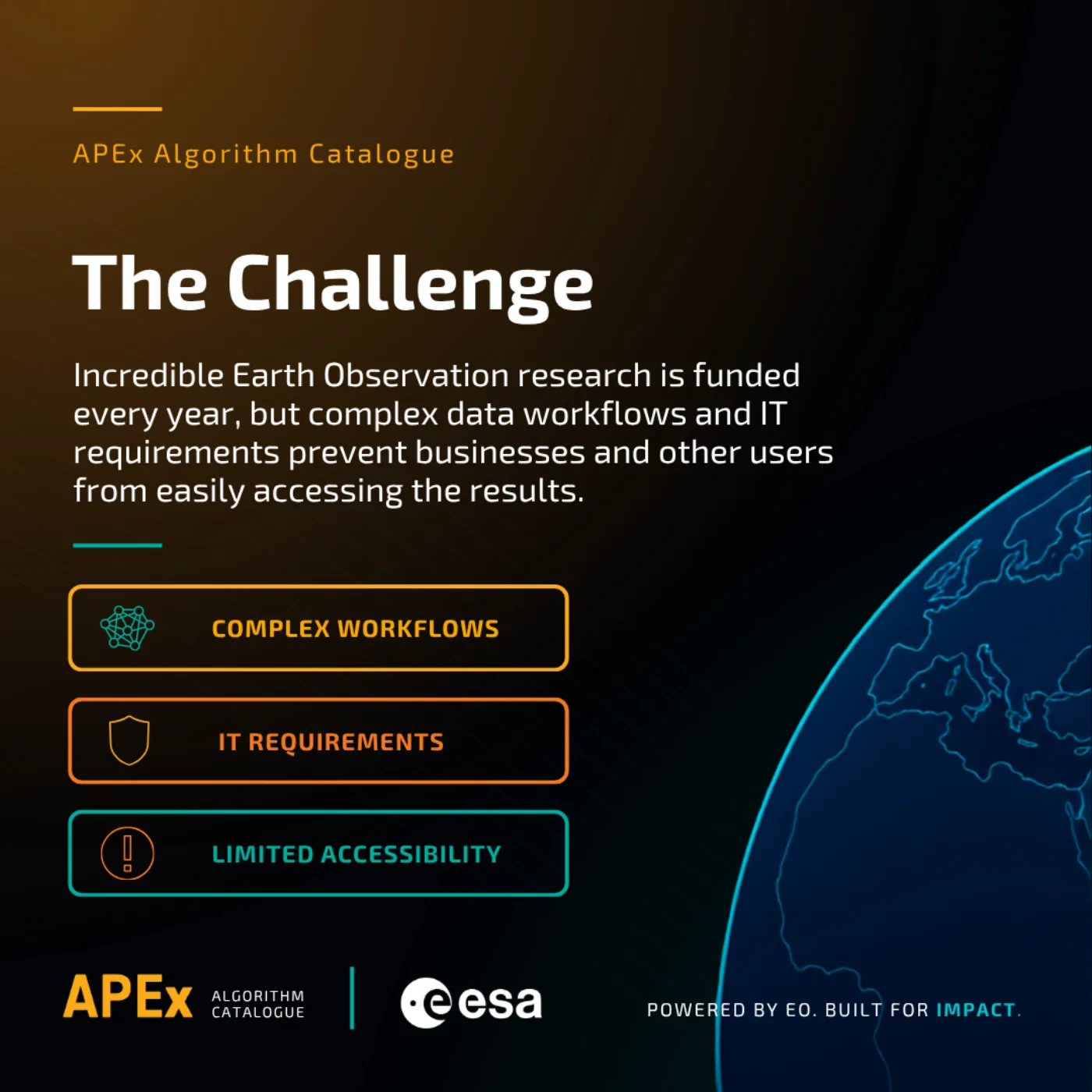
APEx tackles the last kilometre between good Earth-observation research and something that can actually be reused and operated. That distance is not really a technical problem. It is a comprehension one, and three very different audiences each need a different reason to care.
Role
Audience research · Visual strategy · Information design · Engagement design · Adoption planning
I worked across stakeholder and audience strategy, persona development, use-case design, visual direction, engagement formats and adoption planning, creating a framework for different groups — scientists, platform providers and downstream users — to understand and participate in the APEx ecosystem.
System
This included shaping the visual and narrative system, developing audience-specific value propositions, structuring use cases, planning webinars and competitions, and establishing KPIs that measure not only visibility but actual algorithm migration, platform adoption and operational use.
Approach
Define the three audiences, build and validate personas, frame use cases per audience, set KPI baselines, then run tutorial content, events and competitions against a long-term adoption roadmap.


What I Made
Three audiences defined and tested.
Propositions per audience rather than one generic offer.
Planning and delivery.
Evidence
What Changed
The aim was less about promoting a platform and more about designing the conditions for people to understand it, trust it and start using it. The strategy rests on validated personas from interviews and surveys, stakeholder segmentation, use-case architecture, competitions, visual systems, adoption metrics and collaboration with ESA, VITO, platform providers and early adopters.
Reflection
A lot of innovation gets stuck in the distance between good research and something people can actually use. That last kilometre is often the interesting part.