Ten Gresham Street
Making building performance visible
Climate strategy, environmental data and visual storytelling for the repositioning of a major London workplace.
Context
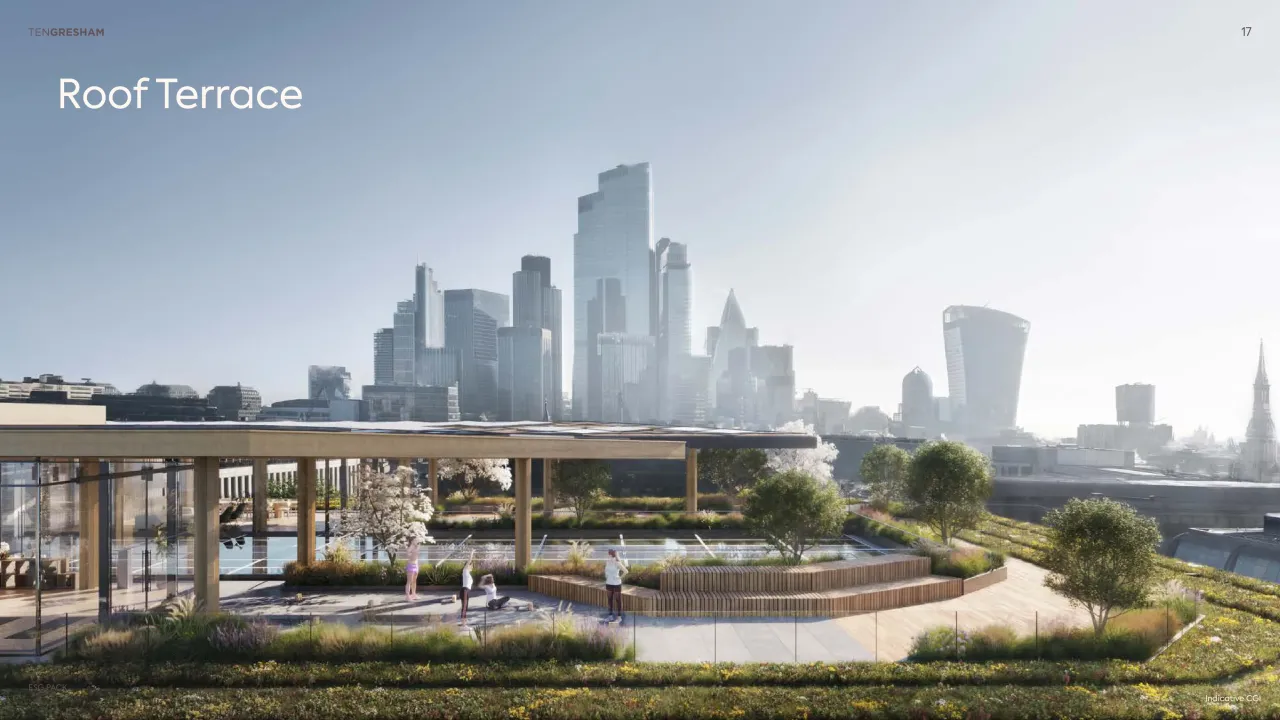
Ten Gresham Street is an existing City of London office building being repositioned rather than replaced. The environmental case for refurbishment over new-build is strong but almost entirely invisible: it lives in embodied carbon calculations, energy intensity figures and certification scoring that most of a building’s audience will never read.
Tension
An ESG report has two audiences that want opposite things. Investors and certifying bodies need defensible, auditable numbers across a dozen categories. Everyone else needs to understand, quickly, why keeping a building standing is a climate decision. Satisfy only the first and it becomes a compliance document nobody opens.
Role
ESG reporting and storytelling · Creative direction of the visual system
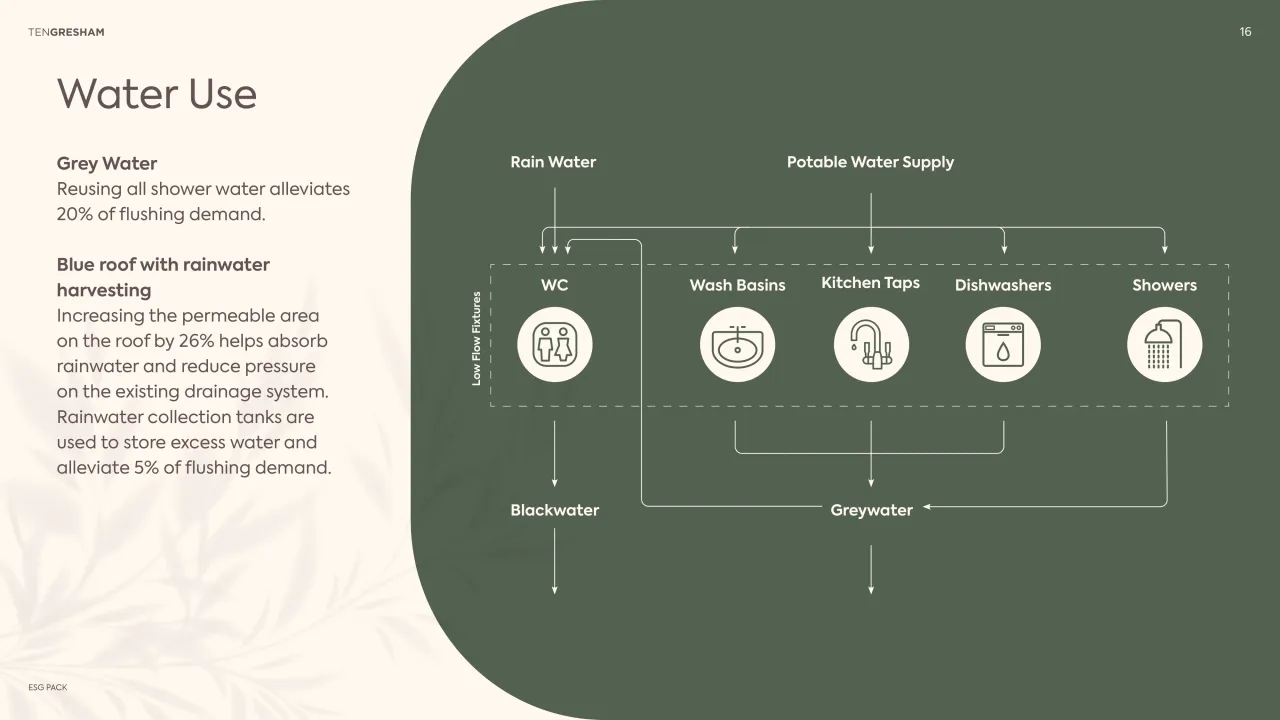
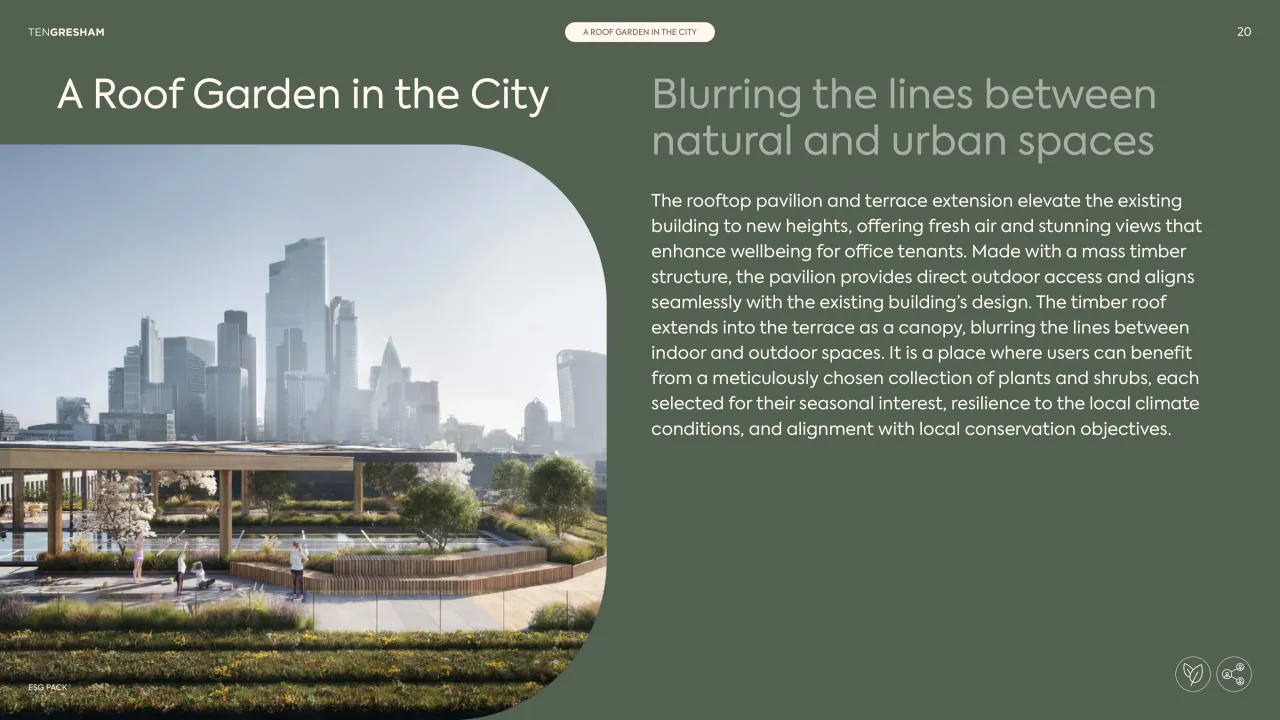
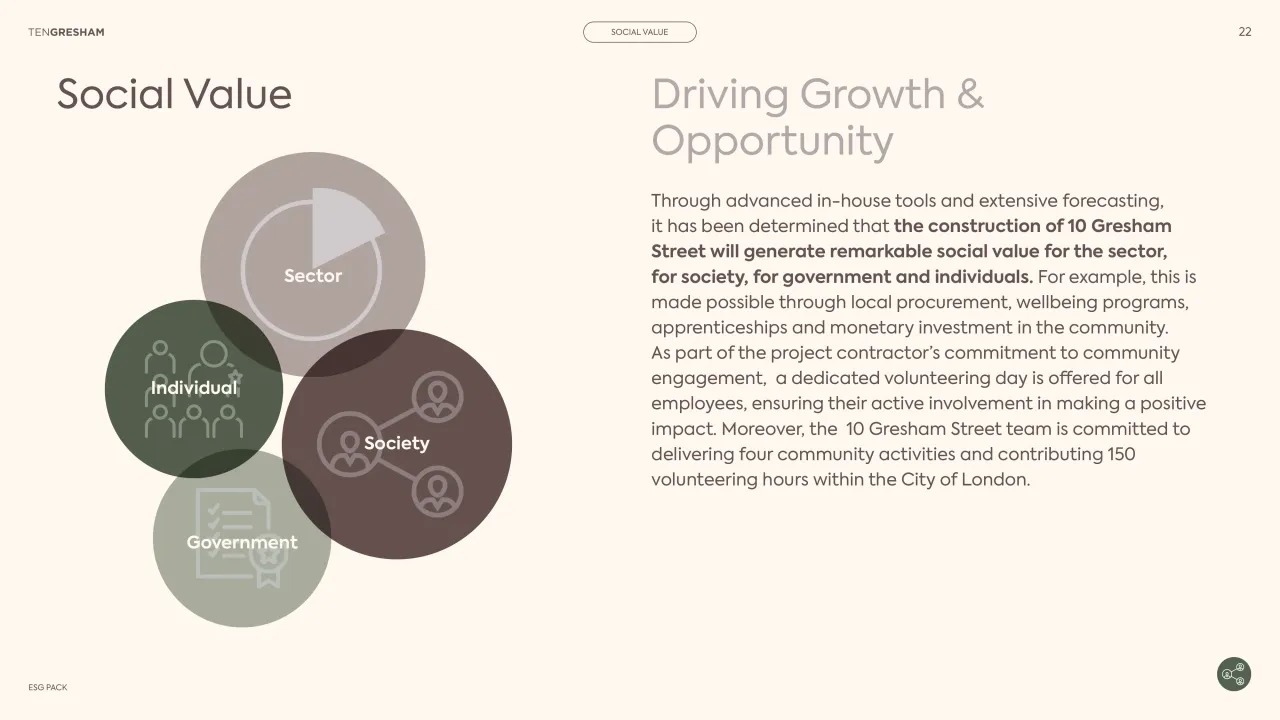
Marta worked at the intersection of sustainability data and visual communication, developing ESG reporting and storytelling that brought together embodied and operational carbon, Scope 1 to 3, water, materials, waste, biodiversity, health and wellbeing, and social value into a coherent client-facing system. She translated technical inputs rather than owning the underlying engineering calculations.
System
The reporting spans embodied carbon, operational carbon, responsible materials, water use, waste management, biodiversity net gain, health and wellbeing, social value, governance and Scope 1, 2 and 3 disclosures. Certification targets run in parallel: BREEAM Outstanding, NABERS, AirRated Platinum, WELL Core Platinum and Active Score Platinum.

What I Made
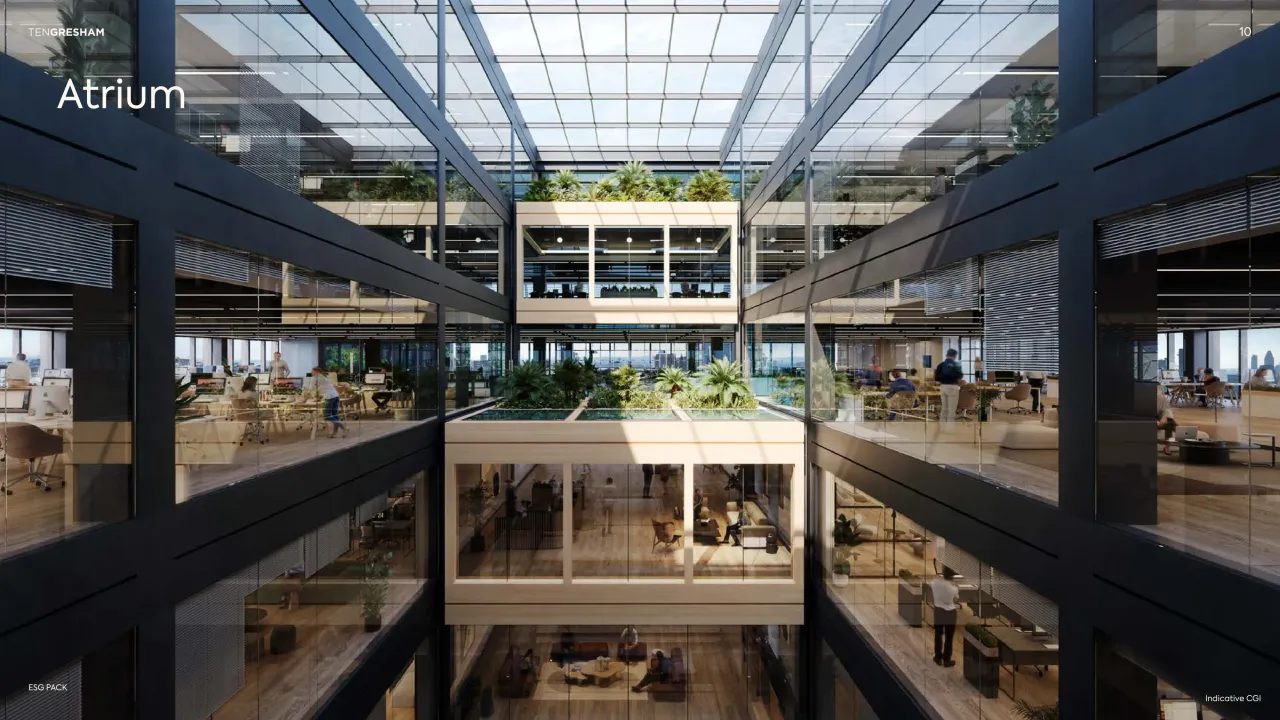
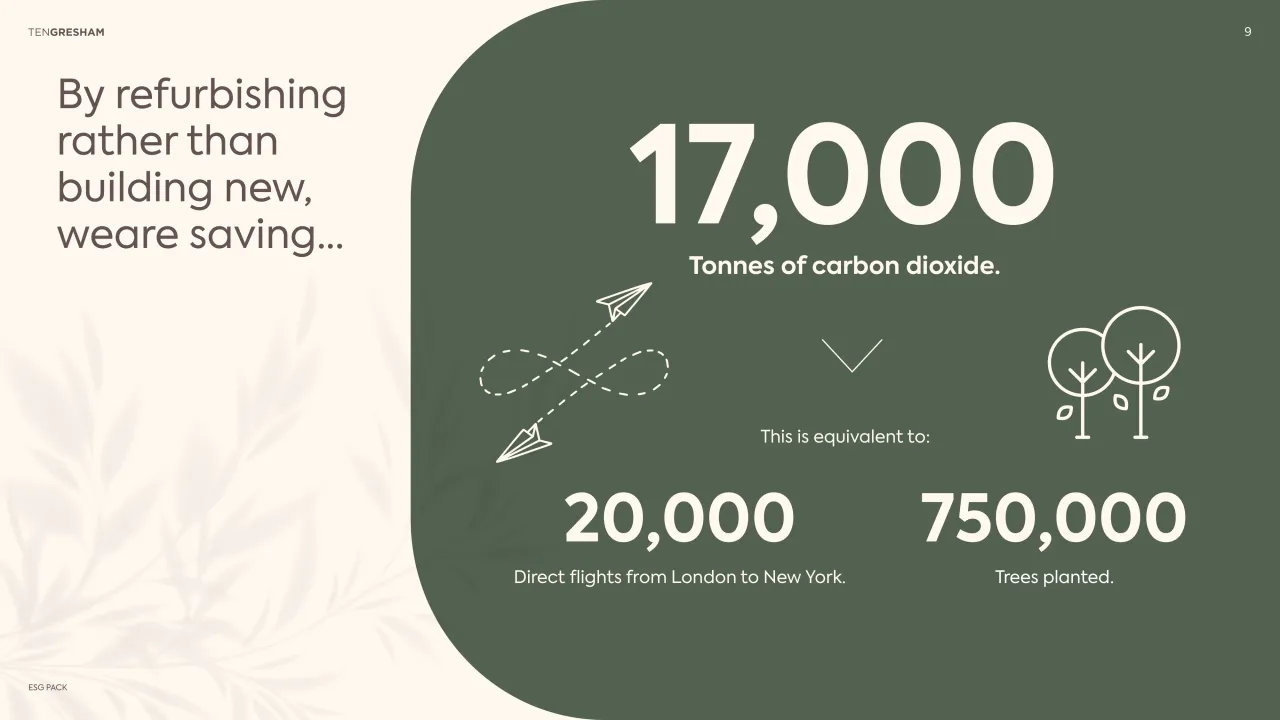
Full environmental, social and governance reporting for the repositioned building.
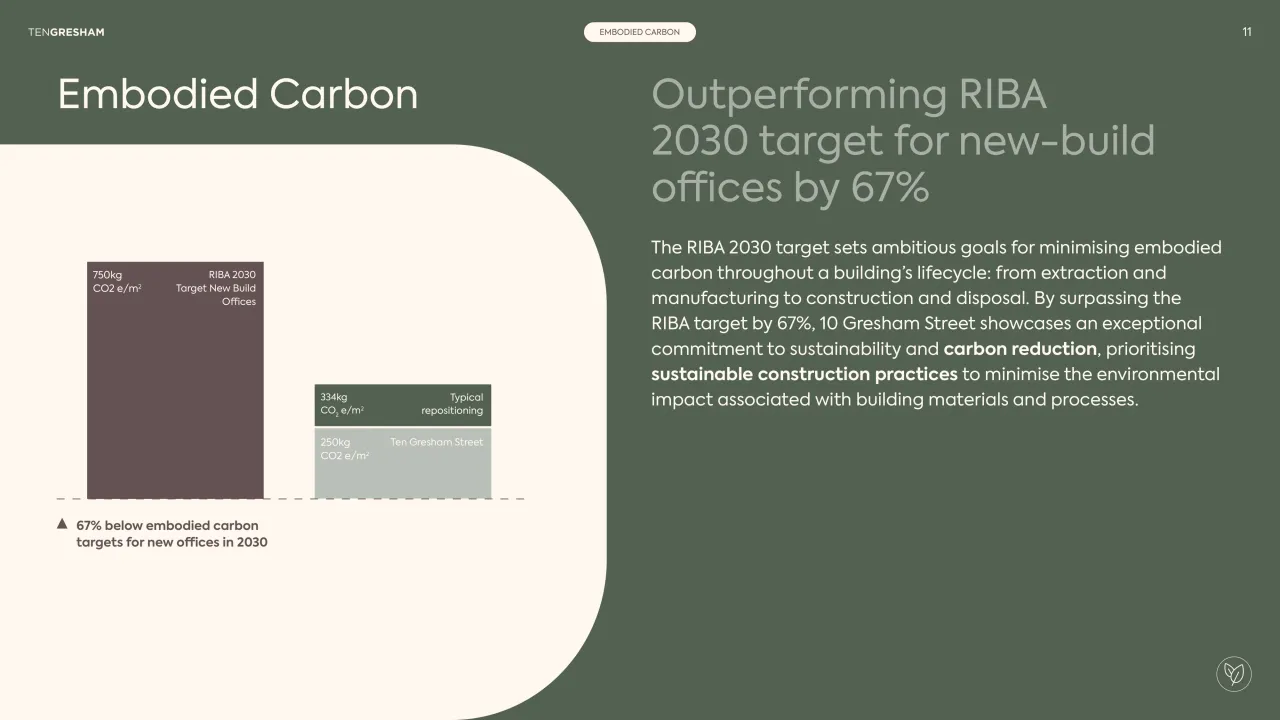
Existing building against repositioned building, across embodied and operational carbon.
Ten reporting categories given a consistent visual and editorial structure.
Evidence
What Changed
The environmental case for keeping the building became legible to people who would never read a carbon calculation.
Reflection
It made me see retrofit as a systems problem: carbon, materials, water, biodiversity and people are difficult to separate once you look closely enough.